BURNAWAY
Thu, September 16, 2021
7:00 PM – 8:00 PM EDT
ONLINE event
Mood Ring artists Alexis Childress, Parker Thornton, and Matthew Flores will join Burnaway in an hour-long Q+A and Artist Talk via Zoom.
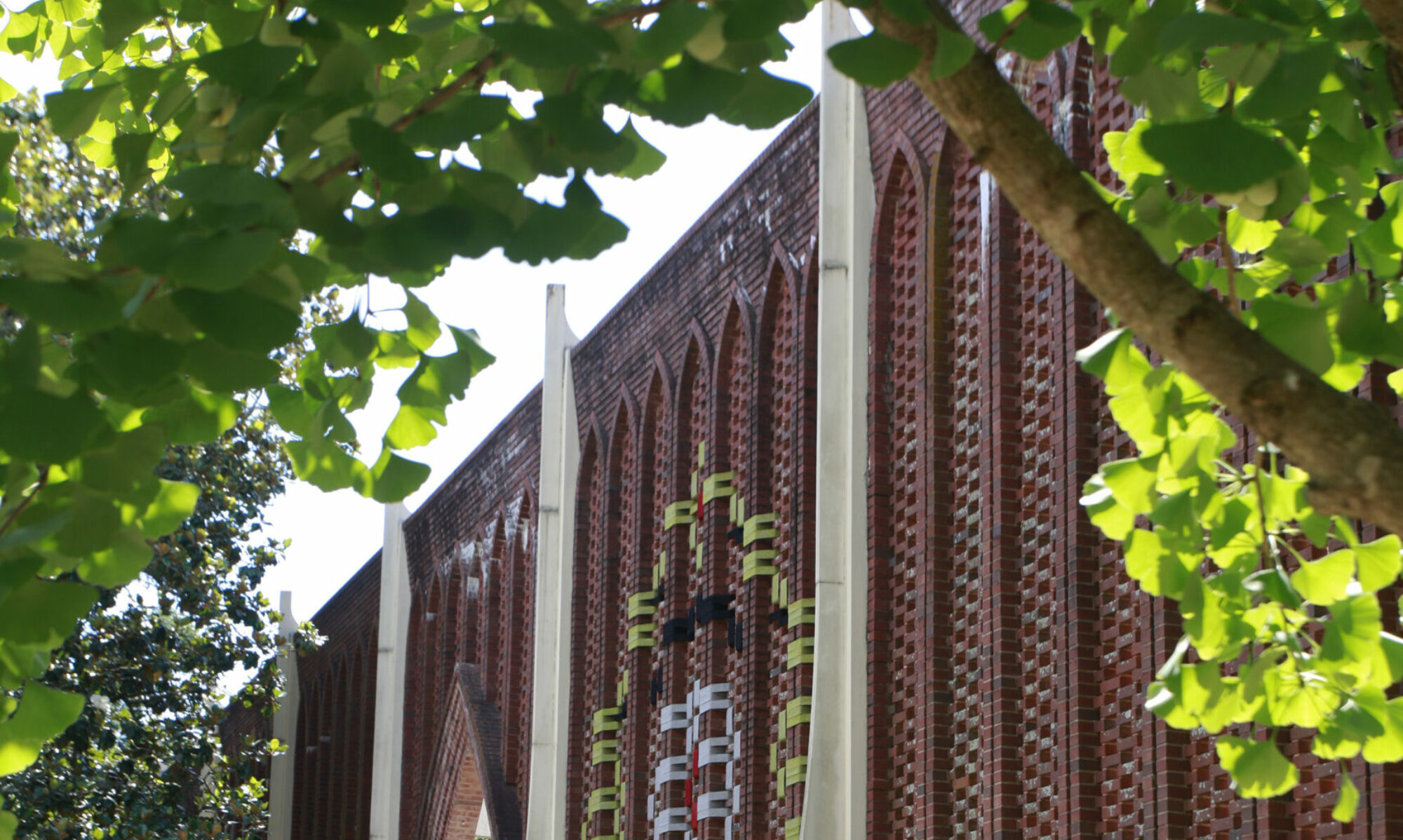
of Agnes Scott College
Thu, September 16, 2021
7:00 PM – 8:00 PM EDT
ONLINE event
Mood Ring artists Alexis Childress, Parker Thornton, and Matthew Flores will join Burnaway in an hour-long Q+A and Artist Talk via Zoom.

KATHERINE SMITH IN CONVERSATION
WITH SUSANNEH BIEBER
Event date:
Monday, March 1, 2021 – 7:30pm to 9:00pm

Charis and Agnes Scott College welcome Professor Katherine Smith in conversation with Susanneh Bieber for a celebration of Smith’s groundbreaking study of the sculptor, Claes Oldenburg: The Accidental Possibilities of the City: Claes Oldenburg’s Urbanism in Postwar America. This event takes place on crowdcast, Charis’ virtual event platform. Register here.
Claes Oldenburg’s commitment to familiar objects has shaped accounts of his career, but his associations with Pop art and postwar consumerism have overshadowed another crucial aspect of his work. In this revealing reassessment, Katherine Smith traces Oldenburg’s profound responses to shifting urban conditions, framing his enduring relationship with the city as a critical perspective and conceiving his art as urban theory.
Smith argues that Oldenburg adapted lessons of context, gleaned from New York’s changing cityscape in the late 1950s, to large-scale objects and architectural plans. By examining disparate projects from New York to Los Angeles, she situates Oldenburg’s innovations in local geographies and national debates. In doing so, Smith illuminates patterns of urbanization through the important contributions of one of the leading artists in the United States.
Katherine Smith is Professor of Art History at Agnes Scott College, where she teaches modern and contemporary art and architectural history and theory. Her research focuses on intersections in postwar American art and architecture, with emphases on sculpture and urbanism, from an increasingly global perspective. She has written on the influence of postwar and contemporary art on projects by Robert Venturi and Denise Scott Brown for Relearning from Las Vegas (University of Minnesota Press, 2009) and Eyes That Saw: Architecture After Las Vegas (Scheidegger & Spiess, 2020). Her research on Claes Oldenburg has appeared in several journals, including Archives of American Art Journal (2009) and Public Art Dialogue (2011). Her book The Accidental Possibilities of the City: Claes Oldenburg’s Urbanism in Postwar America is available now.
Susanneh Bieber is Assistant Professor of modern and contemporary art history at Texas A&M University. Her research focuses on American art of the long 1960s in a transnational context, with a particular interest in the relationship among art, architecture, and the built environment. She has received fellowships from the Smithsonian American Art Museum and the Crystal Bridges Museum of American Art. Her essay on inflatable architecture received the 2020 JAE scholarship design award for best article of the year, and her research on “The Origins of Judd’s Minimal Art” was awarded with the 2017 Terra International Essay Prize. Previously, Dr. Bieber worked as curator at the Tate Modern in London and the Fresno Metropolitan Museum in California. She received her PhD from the Freie University in Berlin.
We will be archiving this event and adding closed captioning as soon as possible after airing so that it will be accessible to deaf and HOH people. If you have other accessibility needs or if you are someone who has skills in making digital events more accessible please don’t hesitate to reach out to info@chariscircle.org. We are actively learning the best practices for this technology and we welcome your feedback as we begin this new way of connecting across distances.
By attending our virtual event you agree to our Code of Conduct: Our event seeks to provide a harassment-free experience for everyone, regardless of gender, gender identity and expression, age, sexual orientation, disability, physical appearance, body size, race, ethnicity, religion (or lack thereof), class, or technology choices. We do not tolerate harassment in any form. Sexual language and imagery are not appropriate. Anyone violating these rules will be expelled from this event and all future events at the discretion of the organizers. Please report all harassment to info@chariscircle.org immediately.
The High Museum of Art
March 25 6:30 pm
Related to The Accidental Possibilities of the CIty: Claes Oldenburg’s Urbanism in Postwar America


Emory University
http://jamesweldonjohnson.emory.edu/home/colloquium/?trumbaEmbed=view%3Devent%26eventid%3D150432999
February 28, 4:15 pm ONLINE
Beasley’s bio
Register in advance (see flier)
University of Illinois at Champaign Urbana [online]
January 28, 6:30 pm EST
https://calendars.illinois.edu/detail/6383?eventId=33398244
Requires advance registration

Bettie Allison Rand Lectures in Art History: Rebecca Zorach, Northwestern University

The Designs of Nature: Form, Matter, and the Making of Art in Early Modern Europe
This series of lectures explores the idea of the agency and creativity of a sometimes personified “Nature” in late medieval and early modern Europe. Often seeming to operate with surprising independence from the Christian God, Nature was understood as both a creator of artists and a powerful generator of images that served as inspiration to those same artists. The series of lectures traces a set of ideas that shaped the work of artists and art theorists, scientists and theologians in both northern and southern Europe, looking especially closely at the problem of “figured stones”: stones (some fossils, some not) that seemed to bear mysterious images “made by Nature.” The lectures touch on paintings by Botticelli, Filippino Lippi, and Andrea Mantegna, along with garden sculptures, architectural ornament, and scientific illustration.
March 22: The Artificious Fire: Nature as Creator in Medieval and Early Modern Europe, https://go.unc.edu/Ld6x4
March 30: Rocks and Stones and Trees, https://go.unc.edu/Yb4t9
April 7: Of Math and Monsters: Nature’s Intentions and Nature’s Play, https://go.unc.edu/c8NKk
April 15: Signs on the Shore: Art, Nature, and the Human, https://go.unc.edu/Ge9a7

Harley Ngai Grieco will give a Brown Bag Lunch presentation on Thursday, January 28, at 12:15 pm. Her talk is entitled “Imagining the Artifact: Collaging Blue and White Chinese Pottery.”
As a style of porcelain decoration, Chinese blue and white is globally ubiquitous. How did this occur and what are the effects of its pervasive design? Through this inquiry, Harley Ngai Grieco will share her research into the dissemination of Chinese porcelain imagery and its many histories. She will then present on-going artistic projects, which combine her photo-sculptural practice with her current research at the Bard Graduate Center Library.
This post is excerpted from Bard Graduate Events Center

In his upcoming talk, Cyrus will delve into the role of self-education in his artistic practice, as well as themes of Black American culture and spirituality in the African diaspora.
By Eva Berlin, Digital Content Specialist, High Museum of Art
On February 4, join Cyrus for his Driskell Prize Lecture: “Phylacteries to Repel Ghosts.” He will discuss the important role autodidacticism, or being self-taught, plays within his work and in Black American culture at large.
On February 4, join Cyrus for his Driskell Prize Lecture: “Phylacteries to Repel Ghosts.” He will discuss the important role autodidacticism, or being self-taught, plays within his work and in Black American culture at large.
Reserve tickets today for the Driskell Prize Lecture (February 4, 6 p.m., Zoom).
Encompassing several mediums from object-based to performance art, Cyrus’s work is a form of self-education and is influenced by such subjects as Black American history and political movements, and spiritual and religious traditions within the African diaspora.
This passage is excerpted from Stories of Art from the High Museum
