&yet again & again

&yet again & again is the 3rd biennial exhibition of emerging artists from Atlanta. This year’s exhibition features the work of 50 artists. The exhibition is on view until April 8, 2024. Gallery hours are Monday through Friday from 12-4pm.

Artists featured in the exhibition are:

Allison Aguilera | Layla Amar | Jabria Anala | Haylee Anne | Horacio Arias-Rodriguez | Fatou Bessem | Amanda Britton | Belinda Grace Brooks | Rachel Burns | Chantelle Chapman | Abigail Cook | Orion Crook | Leslie Drennan | Nina Farryn | Thomas Flynn II | Kiara Gilbert | Mare Hiles | Emma Ming Kayhart | Julia Caroline Knowlton | Sunday Avanti Lemons | Jai’lon Lightfoot | Amber Mccants | Kennedy McNeal | Yari Mena | Kole Nichols | Laura Noel | Amanda Norris | Noah Reyes | Rebecca Robinson | Izzy Romano | Rial Rye | Alice Serres | Maleah Stade | Sophie Snodderly | Silently Stitched | Lizzy Storm | Pilar T.W. | Parker Thornton | Maria Villarreal | Krista Voto | Jessica Vue | Harrison Wayne | Liz Whalen | Jande White | Cameron White | Charlotte Wunderlich | Azin Yousefiani | Nyala Yvonne | Helen Ziga

On View: Can You Hear Us Now?

 Can You Hear Us Now?: Revolutionary Art of the Next Generation opens this Wednesday, March 30.

The Dalton Gallery of Agnes Scott College presents Can You Hear Us Now?, a student-designed exhibition displaying activist art made by young adults in the Atlanta Area. Can You Hear Us Now? aims to oppose historical and colonial institutional practices and the notion of the “neutral museum” by creating space for communities and conversations excluded from art institutions and to exhibit these conversations without expectations of neutrality. Alongside the exhibition, The Dalton Gallery will host conversations with local activist organizations and artists to allow opportunities for the community to engage with activists in Atlanta.  You can find more information on the exhibition website here. 

A project by the Department of Art & Art History this show is created by Art History major Lillian Jackson ’22. 

&yet again

The Dalton Gallery of Agnes Scott College presents a juried exhibition of work by young emerging artists from the Atlanta area- &yet again.

In January 2020 the Dalton Gallery of Agnes Scott College presented a juried exhibition of work by young emerging artists from the Atlanta area in collaboration with community partners. &yet sought to connect and foster conversations among young artists from communities around Atlanta. Thanks to our partnerships we were able to waive application fees in an effort to create an accessible opportunity for young artists as well as award cash prizes to artists selected by Agnes Scott faculty and our jurors.

We are excited to announce that &yet will be returning in January 2022!  Our free application will be open on callforentry.org until 12.31.21.

For &yet again we are expanding on the ideas presented in the first exhibition and augmenting the exhibition with a few new ideas we see as crucial to emerging artists. 

The application fee for this exhibition has been waived as an initiative to limit restrictions for applying for young artists. 

As a part of this exhibition, six $500 awards will be given out through juror’s awards and publicly selected people’s choice awards. 

This exhibition builds connections between artists of all backgrounds as well as members of the arts community. This exhibition will be juried by a panel of Atlanta Arts Leaders.

This exhibition is made possible by the James T and Ella Rather Kirk fund.

Strata

The Dalton Gallery and the Department of Art & Art History are excited to announce our fall 2021 exhibition on view; Strata. Strata is composed of site-specific projection artwork by Shannon Collis. You can book your visit today and read our current Covid-19 safety policy here. 

Strata, a project by interdisciplinary artist Shannon Collis, is an immersive exhibition offering a means of experiencing subtle interactions between sights and sounds to understand the sonic and spatial complexities of the remote regions of the Athabasca Oil Sands. 

For Strata, Collis collected audio and visual material in areas of the western Canadian province of Alberta to create an exhibition centered on regional oil industry activities, examining consequential environmental issues.  

The result of her work—including large-scale video projections mapped onto various-sized planar forms, as well as surround-sound audio that permeates the exhibition space—provides visitors with an immersive experience as they contemplate the moving images. The footage collected onsite is the source material for the installation—a sensory map of regional, industrial, and natural environments. Collis invites audiences who may otherwise be unable to see or hear the complex story of the Athabasca Oil Sands to enter and investigate the constructed sensory space. 

Moving away from the space of the flat screen and toward creating multimodal and immersive physical environments that highlight the embodied experience of hearing and seeing, this work seeks to build a deeper connection between the sensing body and the world, blurring the lines between physical and digital spaces while heightening participants’ awareness of their environment.

Strata is on view 9.20.21 through 12.7.21.

Press Here: Atlanta Printmakers Process 2020

The Dalton Gallery at Agnes Scott College partnered with the Atlanta Printmakers Studio to bring together 15 artists for an exhibition on view in Spring 2021.

It is undeniable that 2020 was an unprecedented year, the effects of which we cannot yet understand. The pandemic and the resulting economic chaos have been stressful, devastating, unnerving, and exhausting. As the number of cases in the US briefly appeared to go down, focus shifted to police brutality and oppression of Black bodies with the murder of George Floyd by Minneapolis police coming so quickly after the murders of Breonna Taylor and Ahmaud Arbery. This centuries-old persecution brought millions of people out into the streets, insisting on change to the models that have supported America (and the rest of the world) for far too long. Under these conditions, it may be difficult to create, but, more than ever, we need to hear from artists. We need to see their reflections and expose new ways of engaging this world being unveiled before us.

Press Here: Atlanta Printmakers Process 2020 is an exhibition of works that act as catalysts for conversations to help us grow, learn, empathize, change the way we see the world, but most importantly for conversations to help us connect to each other. This exhibition called on artists from the Atlanta Printmakers Studio—women, printmakers, artist who use textile in particular as a medium—to help us grapple with what has happened, to explore the impact of isolation, to examine the unseen virus that has caused so much damage, and to set intentions of hope of what is to come.

Printmaking is an artistic practice that can be used to express one’s self, but it can also be used to disseminate information and ideas quickly, broadly, and inexpensively. Press Here is paired with Fashion Statements: Identity and East African Printed Textiles, an exhibition of kangas, which are worn as a form of personal expression or to voice one’s political affiliation. They can be used to commemorate current events and holidays and to share key messages about the pandemic. Pairing visual material from Africa with the work of local artists adds vibrancy, but also fulfills a key mission of Agnes Scott College to connect to Atlanta and the global community.

Press was on view from January 28, 2021 to April 23, 2021 by appointment only.

Searching for Home Video Exhibition Exploration

This year, more than ever, the search for home feels especially relevant. Is home now a place for business, schooling our children and family time? Is our current home ideal or just temporary? Searching for home explores the many ways people are contemplating home in 2020.

The search for home is a journey that we all find ourselves on in life. In this video tour of our fall exhibition hear four artists from the exhibition, the College’s Director of Sustainability and three Agnes Scott College professors of anthropology, sociology, and culture discuss the ideas of home.

Searching for Home

image by Dawn Williams Boyd

A PROJECT OF THE MARGARET VIRGINIA PHILIP ENDOWMENT

Gallery Hours:
The gallery is currently open for in person visits by appointment only Monday, Wednesday, Friday 12-5pm. Reserve your ticket here.

We have all searched for home. Some have found it, while for others it is a lifelong quest. In this century the entire interwoven globe has reeled from constant motion to arrested stop – and soon, back again — reacting to displacement – war – pandemic – violence – poverty – danger – climate – upheaval – politics – chaos – nature’s whims – disease. As the pendulum swings, some search for an ideal PLACE; others yearn for psychic or spiritual sanctuary. The search may be a physical progress or a journey of the spirit; the seeking may be voluntary or forced; tragic or hopeful. The goal is a better life and safety for ourselves and those we love – the security of HOME. Artists are sharing the quests – giving faces to the seekers – exploring the paths – joining the search. We know when we get there.

View exhibition catalog

Featuring work by:
Dawn Williams Boyd
Beverly Buchanan
Yehimi Cambron
In Kyoung Chun
Ruth Franklin
Ruby Franklin
Ruwaida Ghanoum
Clementine Hunter
Marquetta Bell Johnson
Calvin Kimbrough
Grace Kisa
Macey Ley
The Mad Housers
Ethel Wright Mohamed
Sister Gertrude Morgan
Lynn Pollard
Jess Self
Jennifer Shaw
Bernice Sims
Daniel Troppy
Leila Ross Wilburn
Jamele Wright, Sr.

Searching for Home

A Project of the Margaret Virginia Philip Endowment

Dalton Gallery, Agnes Scott College
September 3–December 12, 2020


Online and by appointment Monday, Wednesday, and Friday 12-5pm. Reserve your ticket for an in person visit here. Stay tuned for details on our virtual tour of the exhibition.

We have all searched for home. Some have found it, while for others it is a lifelong quest. In this century the entire interwoven globe has reeled from constant motion to arrested stop – and soon, back again — reacting to displacement – war – pandemic – violence – poverty – danger – climate – upheaval – politics – chaos – nature’s whims – disease. As the pendulum swings, some search for an ideal PLACE; others yearn for psychic or spiritual sanctuary. The search may be a physical progress or a journey of the spirit; the seeking may be voluntary or forced; tragic or hopeful. The goal is a better life and safety for ourselves and those we love – the security of HOME. Artists are sharing the quests – giving faces to the seekers – exploring the paths – joining the search. We know when we get there.

Featuring work by:
Dawn Williams Boyd
Beverly Buchanan
Yehimi Cambron
In Kyoung Chun
Ruth Franklin
Ruby Franklin
Ruwaida Ghanoum
Clementine Hunter
Marquetta Bell Johnson
Calvin Kimbrough
Grace Kisa
Macey Ley
The Mad Housers
Ethel Wright Mohamed
Sister Gertrude Morgan
Lynn Pollard
Jess Self
Jennifer Shaw
Bernice Sims
Daniel Troppy
Leila Ross Wilburn
Jamele Wright, Sr.

Virtual Spring Student Showcase Exhibition

Welcome to the 2020 Virtual Spring Senior and Student Showcase Exhibition. You can find work in this exhibition here, on our instagram, and in our virtual gallery space. Join us for our opening reception Thursday, May 7, at 4pm on Zoom. You can RSVP here.

Work by Class:

Studio Art Senior Majors with Anne Beidler and Nell Ruby

Digital Thinking – Art 144 with Nell Ruby

Digital Thinking – Art 144 with Maria Korol

Visual Thinking – Art 160 with Sarah Emerson

Drawing and Composition – Art 240/340 with Sarah Emerson

Drawing and Composition – Art 240/340 with Anne Beidler

Painting Processes Art 241/341 with Sarah Emerson

Printmaking – Art 242/342 with Anne Beidler

Three Dimensional Thinking Art 243 with Nell Ruby

Creating Artist Books – Art 245/345 with Anne Beidler

Digital Photography – Art 280 with Maria Korol

Videography – Art 295/395 with Caroline Rumley

Special thanks to the visiting faculty!!
MARIA KOROL: Digital Imaging and Visual Thinking: Digital

SARAH EMERSON: Drawing, Painting and Visual Thinking

AMANDA HELLMAN: African Art 

VERONICAL KESSENICH: Survey/Art History


VERY SPECIAL THANK YOU TO
CAROLINE RUMLEY, KIRK VISITING ARTIST / VIDEOGRAPHY
and VERY SPECIAL THANK YOU TO
ANNA CARNES, Kirk Curatorial graduate fellow 

ANNE BEIDLER (Studio) NELL RUBY (Studio)
KATHERINE SMITH (Art History)

&yet catalog

This is the catalog of works in &yet. As a part of our sustainability initiatives, a printed catalog will not be produced for the exhibition. You can click on the links by the listed works below or scan the corresponding QR code on the labels in the gallery to learn more about the works in &yet.

& Curatorial Statement and Thanks &

& Allison Aguilera, Passion Fruit, Porcelain and Watercolor, 2018 &

& Roxanne Anderson, So Will Me & So Will You, Mixed Media on bristol mounted on fabric, 2019 &

& Clarisa Berrios, Midnight, Watercolor and Gesso, 2019 &

                                Sunday Morning, India Ink, 2019

& Hannah Brooks, Pacific Pipeline, oil paint, 2019 &

& Demetri Burke, 6398, Acrylic, charcoal, thread, ink and found images on canvas, 2019 &

& Kate Burke, happy for you, thread, 2019 &

& Hannah Burton, Wishbone, cyanotype and ink, 2019 &

& Hayley Caldwell, Mataya, graphite pencil, 2019 &

& Shawn Campbell, Surmount, acrylic on canvas, 2019 &

& Alexis Childress, Kids With Friends That Call Them Nigger, Digital Photographic Collage, 2019 &

                                Us and Mom at Bethel AME: Church of Black Refuge, Digital Photographic Collage, 2019

& Theodore Clements, Prone to Drift, Oil on canvas, 2013 &

& Brianna Denenny, Discard, wood, metal, found objects, plaster, resin, and cast rubber, 2019 &

& Julia Dwyer, Float, Monotype print, 2019 &

                        Forbidden Fruit, Monotype Print, 2019

                        Breaking Waves with Stones, Monotype Print, 2019

& Meredith Elder, Appetite, Mixed media on canvas, 2018 &

& Megan Fowler, Two Youths Sharing a Passionate Kiss, oil on canvas, 2019 &

& Zachary Francois, Bunny in the red sweater, Film Photography, 2019 &

& GW Harper, Hell Hath No Fury, Mixed media on stained wood with acrylic finished in resin, 2019 &

& Melissa Huang, Old Friend, oil on canvas, 2019 &

& Benjamin Hunsinger, Printing Problems, Latex paint on canvas, 2019 &

& Matthew Jacoby, 5, ink on paper, 2019 &

& Lydia James, Destination Dekalb, fabric applique, thread, watercolor, coffee on embroidery hoop, 2019 &

                                Ponce Sunset, fabric applique, thread, beads, on embroidery hoop, 2019

& Emma Kayhart, Puzzle #1, Screenprint and cut paper, 2019 &

& Kristyn McKinney, House Code, House paint and mixed media collage on wood panel, 2019 &

                                Three Signals from the Sky, House paint and mixed media collage on wood panel, 2019

& Paola Mejia, Reaching, Mixed media, 2019 &

& Walker Moore, kitchen, digital photography, 2019 &

& Devin Morrison, It’s a Black Life!, Vine charcoal, compressed charcoal and graphite, 2019 &

& Celeste Nelson, Mischief and Little Suzy, Soft sculpture, 2019 &

                                Curly Shurley, Soft sculpture, 2019

                                Broccoli Head, Soft sculpture, 2019

& Arshaad Norwood, Black Madonna, acrylic painting, 2016 &

& Beck Odum Casez, Women of Questionable Morals, cotton fabric and thread, 2019 &

& Avanti Only, Honey, gouache, 2019 &

& Anastasia Owen, IN MY BAG, acrylic, 2019 &

& Yesha Panchal, Hidden Beauty, Clay, underglaze and glaze, 2019 &

                                Crevices that Gives life, clay, glaze and sand, 2017

& Kama Pellani, Darn, cotton socks, 2018 &

& Mackenzie Ring, 21 Quint Ave Bathtub, oil on canvas, 2018 &

& Timothy Short, After 1000 Years Diptych (top), oil on canvas, 2019 &

                                After 1000 Years Diptych (bottom), oil on canvas, 2019

& Abigail Stern, Body Image (pink), woodblock print, 2019 &

& Daniel Stone, Dave, Ink, 2019 &

& Christina Teruel, American Dream, video, 2019 &

& Emily Tomlinson, Drawing., gesso and graphite on paper with wall drawing, 2019-20 &
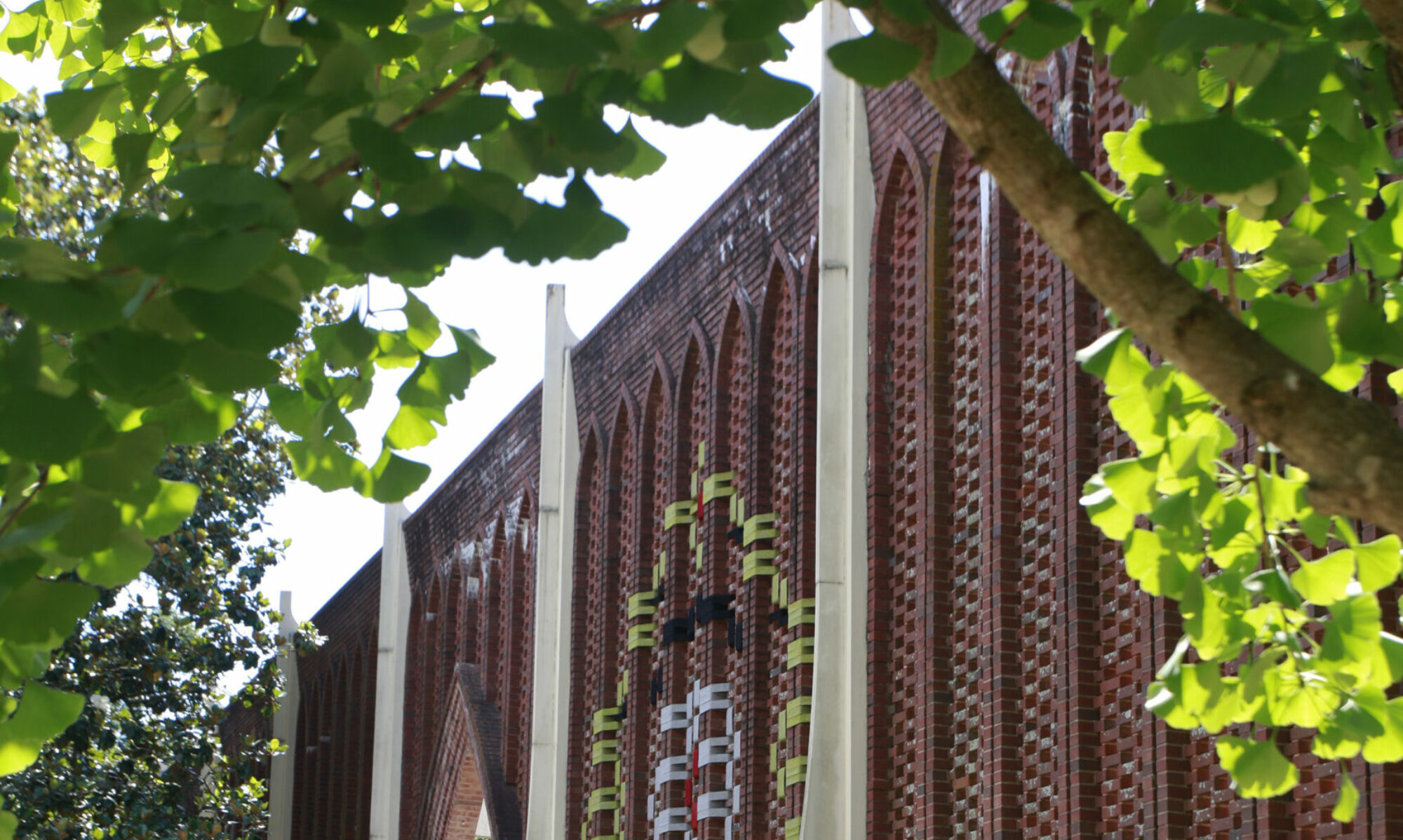
&yet

&yet, an exhibition of young emerging talent in Atlanta was on view 2.13.20 through 3.6.20.

The Dalton Gallery of Agnes Scott College presented a juried exhibition of work by young emerging artists from the Atlanta area in partnership with the Decatur Arts Alliance. &yet sought to connect and foster conversations among young artists from communities around Atlanta. Thanks to our partnership with the Decatur Arts Alliance we were able to offer a free application in an effort to create an accessible opportunity for young emerging artists from the area to experience the valuable processes of a working artist. Thanks to the James T and Ella Rather Kirk Fund we were able to award $3000 in prizes to six artists in the exhibition as selected by the Jurors and Faculty Members. Juror Pick awards were given to Melissa Huang, Benjamin Hunsinger, Celeste Nelson, and Yasha Panchal. Professors Pick awards were given to Devin Morrison and Kama Pellani. You can find the exhibition catalog here.

&yet featured work by 40 artists aged 18-30, from the Atlanta community, as juried by arts leaders Veronica Kessenich, Director of the Atlanta Contemporary Art Center, Yu-Kai Lin, Owner and Director of Kai-Lin Art, and Joseph Peragine, artist and Director of the Ernest G Welch School of Art and Design at Georgia State University.

Details from Celeste Nelson, Curly Shurley.

Created and curated by Kirk Curatorial and Collections Fellow and recent Agnes Scott College graduate, Anna Carnes, `19, this exhibition was a demonstration of the Agnes Scott Summit initiative in developing leadership skills and fostering connections with others on a local and global scale.  You can find her curatorial statement here.

This exhibition is made possible by the James T and Ella Rather Kirk fund and sponsored in part by the Decatur Arts Alliance.

&yet – an exhibition of young emerging talent in Atlanta

The Dalton Gallery presents a juried exhibition of work by young emerging artists from the Atlanta area in partnership with the Decatur Arts Alliance.  This exhibition is made possible by the James T and Ella Rather Kirk Fund.

&yet seeks to connect and foster conversations among young artists from communities around Atlanta. In the spirit of the past exhibition series- Collage– this exhibition provides an accessible opportunity for young emerging artists from the area to experience the valuable  processes of a working artist—from the the digital application on cafe.org, to the jurying process, and to seeing their work hung in an established gallery space among their peers. By partnering with community arts non-profit, the Decatur Arts Alliance, this exhibition will offer networking opportunities to connect young artists with the community at large. 

Artists aged 18-30 working in the Atlanta area are invited to apply. Applications are open until January 3, 2020. Apply today!

Side by Side

Side by Side: Selections from the Permanent Collection on view September 19, 2019 – January 12, 2020 curated by Veronica Kessenich.

Side by Side: Selections from the Permanent Collection examines the nature of acquiring a collection, learning about art and exploring how artists’ taste and content evolve over time. Curated by Veronica Kessenich, executive director of Atlanta Contemporary and visiting instructor in art history in the Agnes Scott College Department of Art and Art History, the exhibition centers around never-before-seen pieces requiring framing, restoration and current cataloguing. Side by Side aspires to illustrate the unity of the collection, which has at times seemed fractured, thereby deepening the mission and values of the Department of Art and Art History within the values and aspirations of the college and community it serves. Works collected since 1925 reflect the storied history of the college and, thereby, present an illustration for today’s student to reflect on the social and intellectual challenges of our time, as seen through a century of changing values. New acquisitions, chosen specifically for this exhibition, strive to fill gaps and steward a collection that reflects our awakened and evolving values.

The permanent collection began at Agnes Scott in 1965 with a gift of 50 original works from Harry L. Dalton, given to the college in honor of his wife, Mary Keesler Dalton, class of 1925. The Dalton Gallery was subsequently named after them. Over the past five decades, Agnes Scott College has expanded this collection to include notable works by important Atlanta-based artists and nationally renowned contemporary feminist artists. Many of the works presented permanently reside in offices and buildings throughout the campus. This exhibition will highlight those rarely exhibited works and recently acquired acquisitions. The works will be re installed, campus-wide at the conclusion of the exhibition.

One of the comparisons from the exhibition- (left) Angela West’s Nature Morte: Still Life #11, undated, color photograph c print and (right) Max Schnitzler’s The Bouquet, 1941, oil on canvas.

The Possibility of Framing Infinity

The Possibility of Framing Infinity on view spring 2008 curated by Lisa Alembik.

“Painting as a noun takes on limitless form and attitude. It can arouse visual pleasure, support a manifesto, tell a story and speak of ideas. It is carved out of history. As a verb, painting is a suggestive practice that unfolds and is often self-reflexive. It is about color and shape and the senses extraordinaire. A rich process of exploration can take place through the goop of the medium, the blending of pigments and energetic eye movement. In action, the painter’s scope of vision will enclose the picture plane like a web—or like the hot pinball machine of life. This process has the power to capture a point of view, cracking open space to produce new galaxies, often delving into the personal and unknown. Articulated and raw, restrained or whatever, painting at its best is a commitment that constantly poses questions.

The processes employed when painting can play a significant role in the development of any artistic work, infiltrating composition and method. This exhibit was inspired by this belief, that a painting sensibility, the dug-in knowledge developed through an intentional, prolonged experience of painting, can be expressed through a variety of forms and media. It is a way of thinking, of looking at the world that rests in composition. This idea allows for the making and exploration of culture with a focus on fluid form, light and material.

As this exhibition evolved, a certain sensation emerged from within the early gathering of artists, nothing out of the ordinary or uncommon, but a very strong binding sensibility. The exhibit’s founding premise, of bringing together artists working in a variety of media through a painter’s lens (or brush), became less of a priority than fostering this sensation, identified as the artists’ consideration of a limitless, never-ending continuum of space that changes with perspective, over time. The title, The Possibility of Framing Infinity, is meant to be open-ended as not to describe the artwork but the act of making.

For centuries artists have been working to express space and time—whether for a specific narrative or as a means to an end. Grounding this within the history of art, three artists or works of art are brought to mind. Consider the painting Mona Lisa (1503-1506) by Leonardo da Vinci (1452-1519). The sitter, with her enigmatic smile, is front and center, with rolling, misty hills disappearing into a diffuse background of atmospheric perspective. It has a sense of continuum, of forever, not only in the landscape but also within her visage. In the painting by J. W. M. Turner (1775-1851), The Burning of the Houses of Lords and Commons, October 16, 1834 (1835), which is exemplary of his work, the scene breaks into an intuitive deconstruction of the moment, with color and light telling the tale rather than an exact rendering of a historical incident. To Barnett Newman (1905-1970) whose paintings with “zips,” as he called them, begun in the 1940s, embedded the sublime into vibrating planes of color where the splits simultaneously break and hold his work into dense motion.

This framing of a place or body, whether it is a literal figurative point of view or a formless and intangible space can be experienced throughout this exhibit. In Colleen Lynch’s, Marcia Cohen’s and Caomin Xie’s paintings, a world is abstracted to come together into a meditative or ocular whole. A happening is described and re-scripted as it repeats through history—as the flood of Katrina is riffed and swelling in the sensory installation by John Otte. Jeremy Chance strives to disassociate himself from the potentially personal, emotional process of painting by honing in on headshots of actors portraying various expressions connected with depression, utilizing the distancing processes of printmaking to further himself from emotional stimulus. The picture plane, broken into a wake of formlessness, is reinvented and pulled together by the artist. Sally Heller creates environments of overgrown fuzzy and plastics stuffs that explode in space, with trees of PVC pipe, grass and mosses of pipe cleaners and Mylar pools of water. By framing these moments, space is re-shaped and transformed. For Sarah Emerson, the threshold of mortality is highlighted next to the unending unraveling coil of infinity in her existential explorations. Kristine Moran’s overflowing, unfolding worlds are empty of living human presence, where remnants of abandoned warehouses are overgrown with unbridled nature—flooded, iced over—still lit by the artificial glow of florescent lights.

Framing usually showcases something in its best light, possibly at its most effective essence. To frame infinity, to square off the limitless and timeless, is a bold endeavor.”

-Lisa Alembik, Dalton Gallery Curator 2002-2013

looking/longing

looking/longing on view Fall 2007

“looking/longing is simple in its premise,  offering a phenomenal experience of looking and a visual meditation on the potent power of the medium of photography.

We absorb our surroundings by reading clues of light bouncing off objects, our subconscious quietly processing the scope of our vision. When a person, landscape or object is immortalized through a photographic process, we may be enticed to look. We could be attracted just to know why the subject is significant to the photographer. If we are stirred, our attention held, a certain sensuousness of the medium and subject could continue to embrace our gaze to entice a deeper study.

Sensitive silver salts exposed to light will congeal to express a fugitive instant in two-dimensional form; the black and white negative: white values become dark and dark ones bright. A fertile moment condensed, framed and flattened—mediated. Complex worlds are pressed into these thin sheets of film.

The viewfinder brings into reach news of the nearby and faraway. Striving to read the history told by the image, we consider ourselves witnesses to times and people lost to us without the magic of photographic reproduction. For more than a hundred years, ‘we’ have come to know the ‘other’ and they us through the photograph. We allow ourselves to step into homes, spaces, dreams, histories.

Private and public spaces retain or create intimacy through the photograph. We become comfortable. The eye behind the camera directs our gaze, but in all fairness to the subject we cannot hold its truth as our own. Seeing is such a personal endeavor, eh? We might register the photographer’s point of view, but how we approach a photograph depends much on our personal visual histories. We are creatures who like to look, to watch, to stare even. We want to trust in the photograph, especially when beauty—qualified by the eye of the beholder, of course—is involved.

Ah, beauty—we fall all over ourselves to witness it, to gaze in awe and reverence. Its sweetness can be seen in so much of life: the soft curve of a back; the expression of spirituality; the open landscape; and youth. There is a strange flipside to such loveliness in the surrender to aging and mortality. Through the lens a mundane subject can become spectacular, elevated to the sublime. A landscape can become a mirror to hope. Sometimes the subject looks back through the frame, literally or figuratively, to step into the world of flesh—tugging at the gut, pulling at baser instincts. A glance intended for someone else can slice into a place that frames questions of knowledge and desire. Does the viewer have a sense of dissatisfaction in not being able to replicate that first look of the photographer? May be looking again, and again, one can slip into the image.”

-Lisa Alembik, Dalton Gallery Curator 2002-2013

Velocity of a Single Gesture, or How to Build an Empire

Velocity of a Single Gesture, or How to Build an Empire on view spring of 2007.

“In an interview by journalist Ron Suskind, a senior White House adviser is quoted as saying “We’re an empire now, and when we act, we create our own reality.” In the exhibition “The Velocity of Gesture, or How to Build an Empire,” artists are recognized as rulers of their picture planes, creating their “own reality” through personal sensibility and gesture.

Conducting with a baton, making the sign of the cross, waving a magic wand or saluting a crowd—all are acts in which the drama and tempo of a hand movement have significance. Power lies in the character of the motion, its location in relation to the body and a reading of the culture from which it stems. Communication is nothing without gesture—the lift of an eyebrow, the flick of the hand under the chin. Gesture can become spectacle: the sharp finger cutting quickly horizontally across the neck (one need not even say “off with her head!”); the chilling hail to the führer with arm quickly angled outward, palm flat; Madonna’s hand gripping her crotch. Movement will embody tradition, as with a Flamenco dancer’s snap of the fingers or a circle of women singing, sewing and stitching—needles pushed in/ pulled out, pushed in/pulled out—the rhythms of communal gesture solidifying kinship. Then there is subconscious movement and matters of survival, such as bending away from a hot stove or undesirable suitor.

The artists in the exhibit distill force to its essence, commanding our attention with spectacular movement or quiet seeping and understated subtleties that express a universe through nuance—the whispered vibration of a gesture, an unhinged mark on paper. Grounding can fall away as gravity loses earthbound specifics that we, the viewer, have come to know, as evidenced in the work of Andrea Prince and Teresa Bramlette Reeves. Artists like Avantika Bawa negate actual space by flattening the picture plane to build new dimensions, fabricating unreal depth using various signatures of perspective. Others, like Fereydoon Family, draw changes in space and time by manipulating line and color. Steven Sachs uses only worn, flattened materials—that on which the universe has left an aggressive mark. Personal sensibilities are laid bare; Brent Fogt for instance, draws quiet methodically repetitive lines where others—Albino Mattioli—are vigorous in their approach, breaking the surface with dense slashes so colorful and broad that line becomes shape and shape is planetary. One can try to read artwork like a seismograph, making tangible the artist’s electrical pulse.

Breaking from known paths as process takes the reins, the artist’s hand/body moves with its own intelligence. Myrtha Vega allows her pen to flow parallel with her scope of vision, seamlessly ‘collage”-ing sites to form cohesive landscapes. Artists like Allan Ludwig and Sid Garrison run headlong up daunting slopes, disappearing around uncharted corners, mapping out subconscious landscapes. They make material the direction and speed of their route, evidence of their journeys. Gregor Turk, in his sculpture series “Limits”—where he fantastically charts boundaries through strange wormy forms—tells of the culture of shifting borders, both literal and imaginary.

These artists are visionaries, making policy for their territories, designing a cosmos from personal truths to find a way of understanding the boundless universe. Alex Kvares scratches into the membrane between public and private worlds of the performer/hermit, stepping open into the spotlight only to crawl back into the cave. Torkwase Dyson considers the bling of hip hop culture, focusing on a nihilistic road paved with wheel spinners and engines with decadent grills, raining teardrops of oil.

Within such acts of making empires are borne, vibrating with particular momentum and atmosphere, each a soliloquy in its own private universe. These artists gathered under a grandiose title are pushing out from a concrete and bloodied Empire, breaking through layers to pull at a buried reality, coffins hidden from sight. We, the viewer, become archeologists with the hope of digging deeper, visually cutting into the foundation of these new civilizations, studying the webbed fields of electricity and symbolism.  Cartographers of interior lands, marking explorations from point A. to point D., these artists bring to the surface unknown worlds and newfound kingdoms tightly drawn with pen, paint, video and clay. What could be more real than that?”

-Lisa Alembik, Dalton Gallery curator 2002-2013

css.php